
מרחב למידה בתנועה
Educational innovation is not limited to technology; it reflects a broader value system that includes versatility, dynamism, flexibility, creativity, relevance, and curiosity. Based on the understanding that learning occurs at all times and in all places—and in response to diverse working patterns among students—the project developed a spatial approach that views learning environment and workplace design as an active infrastructure supporting thinking, movement, and action.
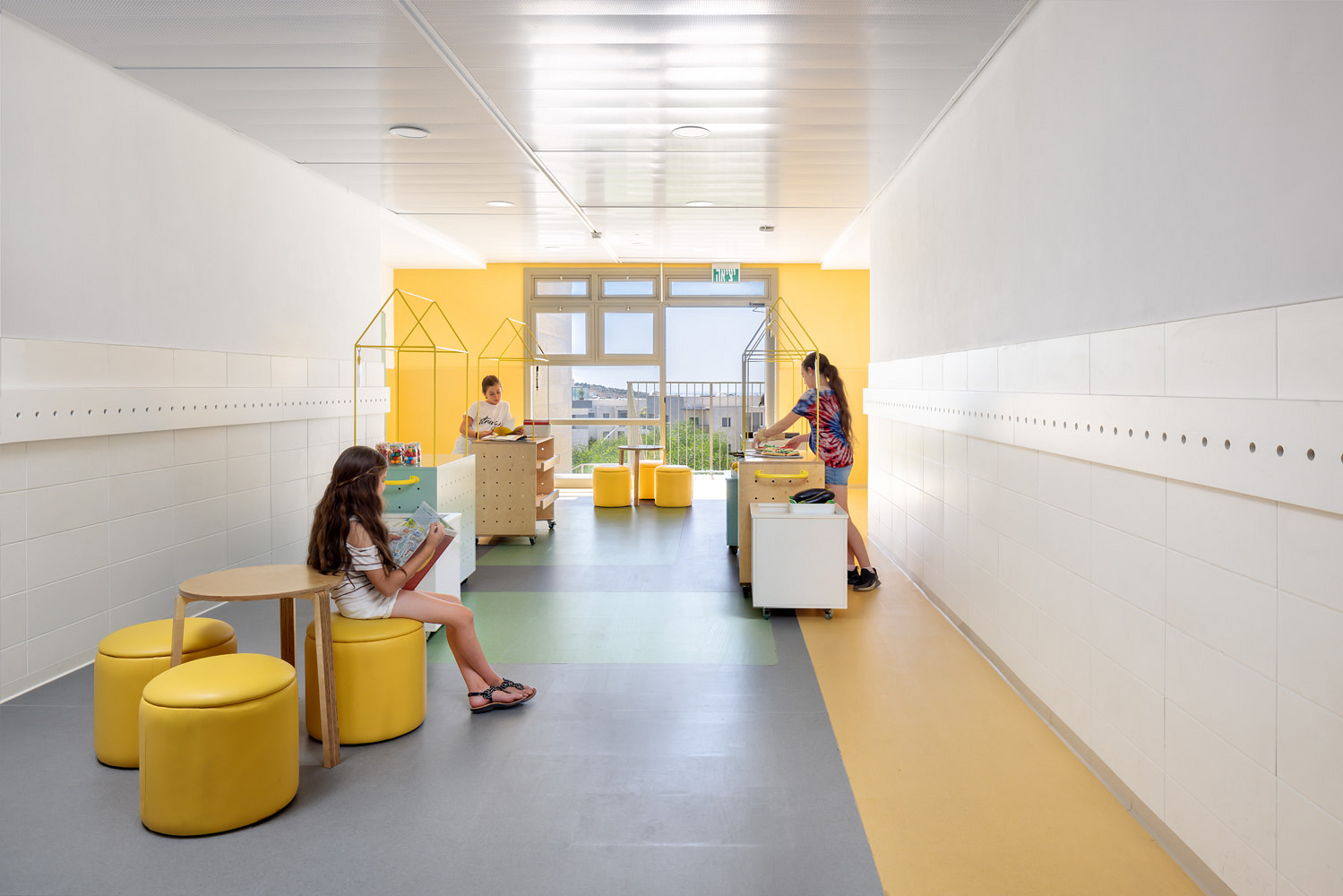
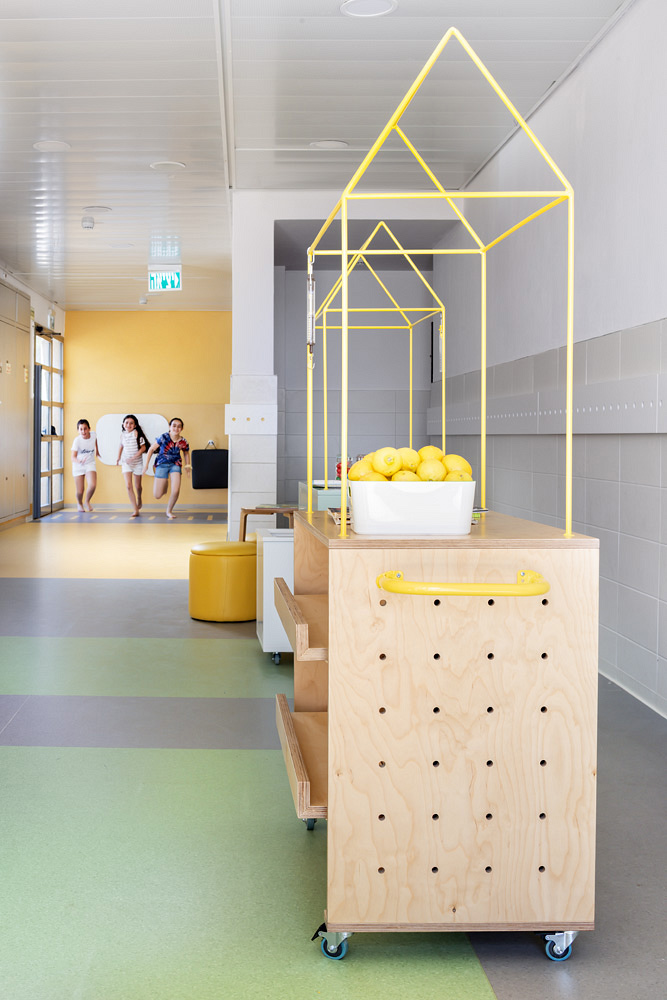
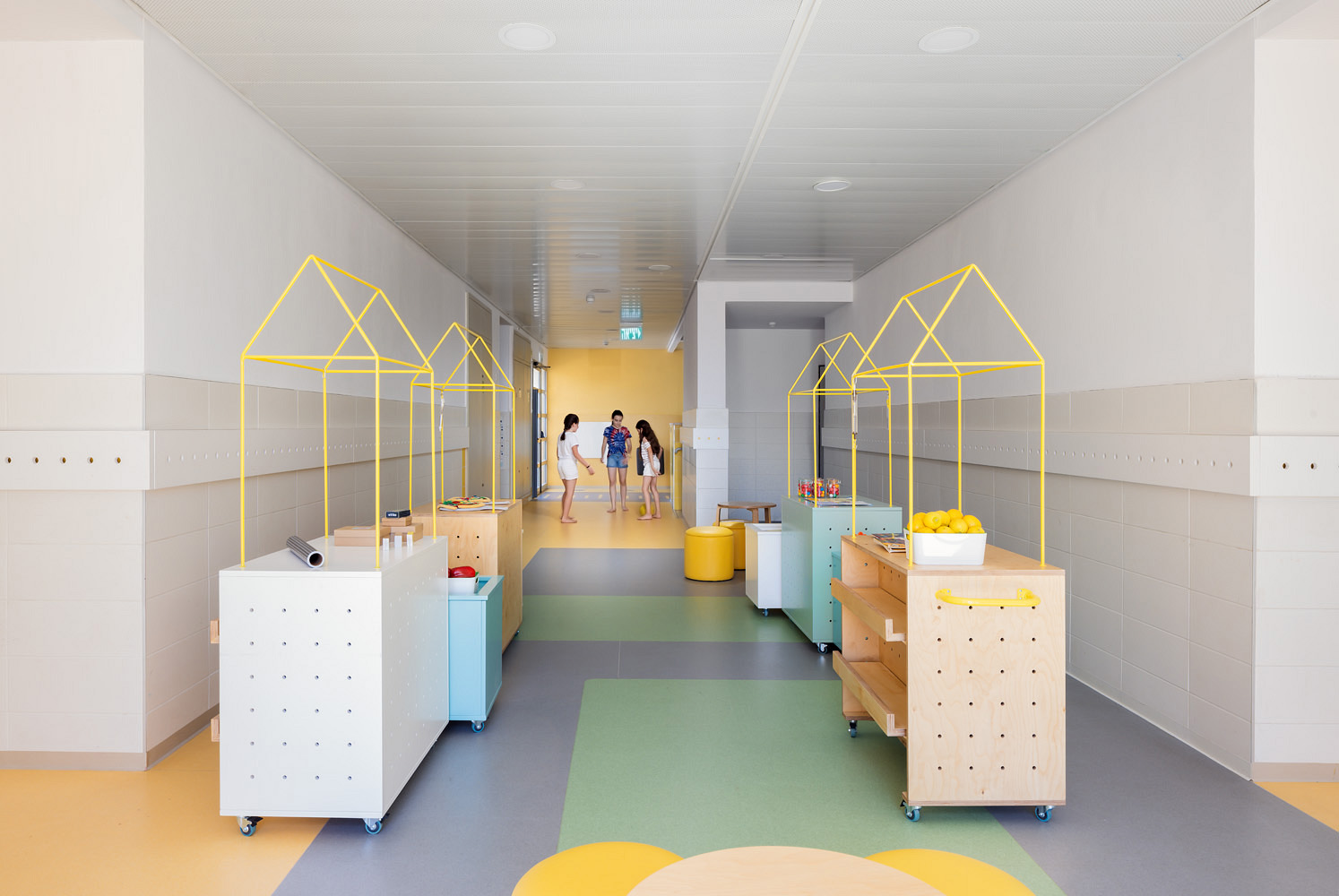
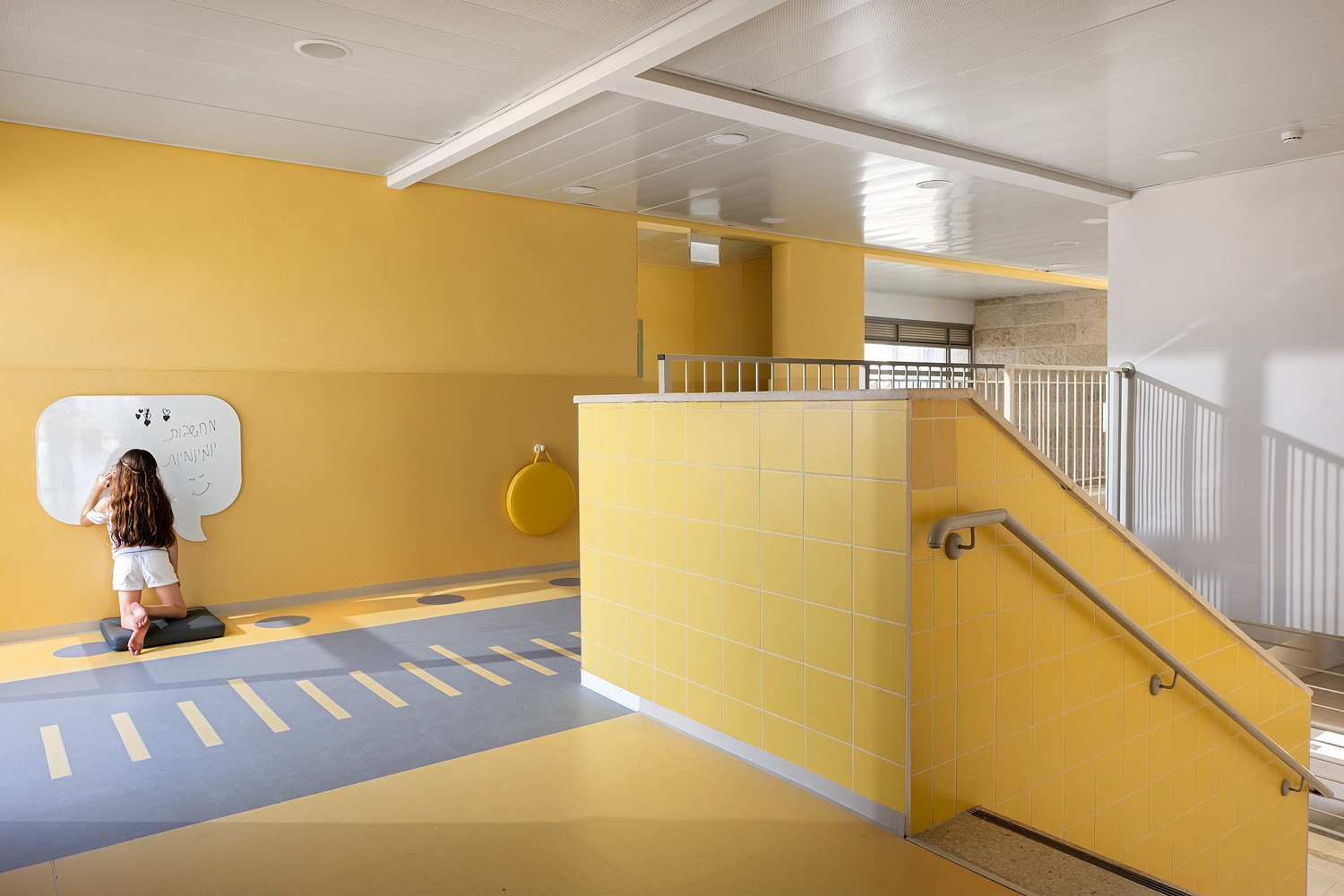
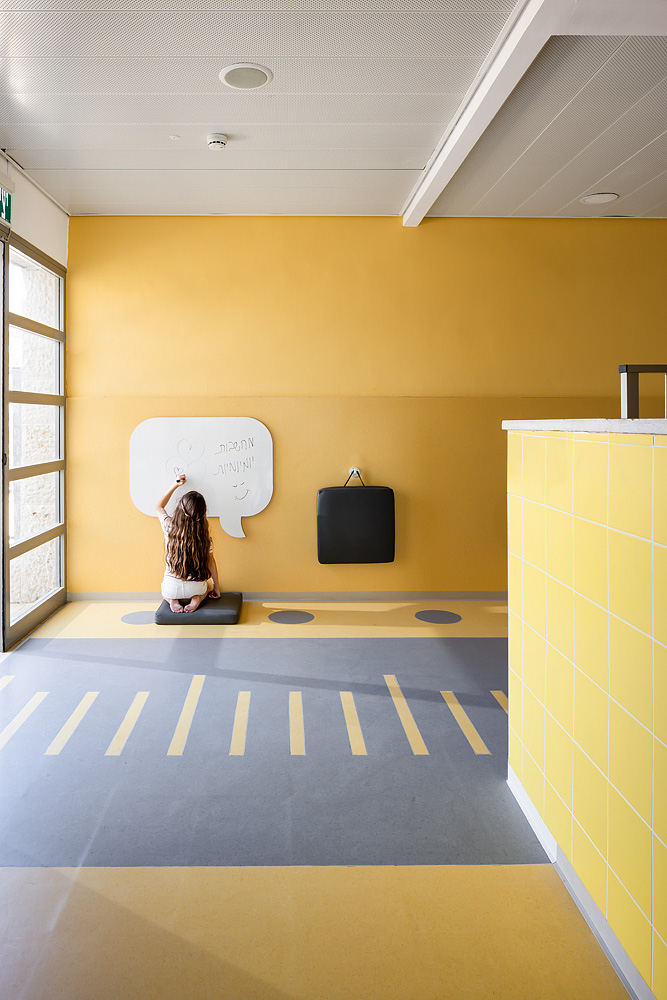
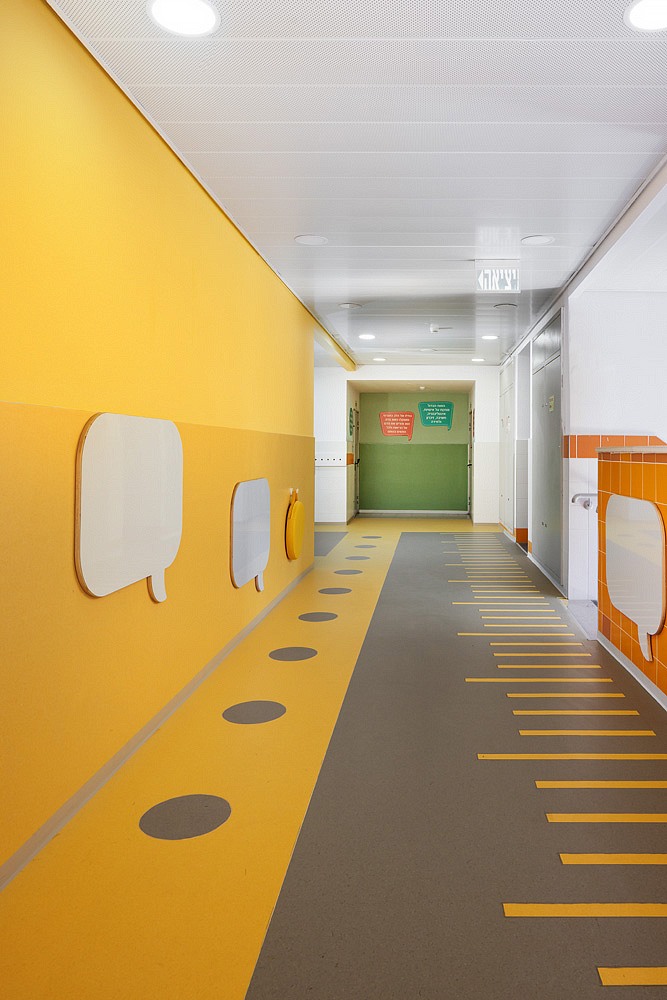
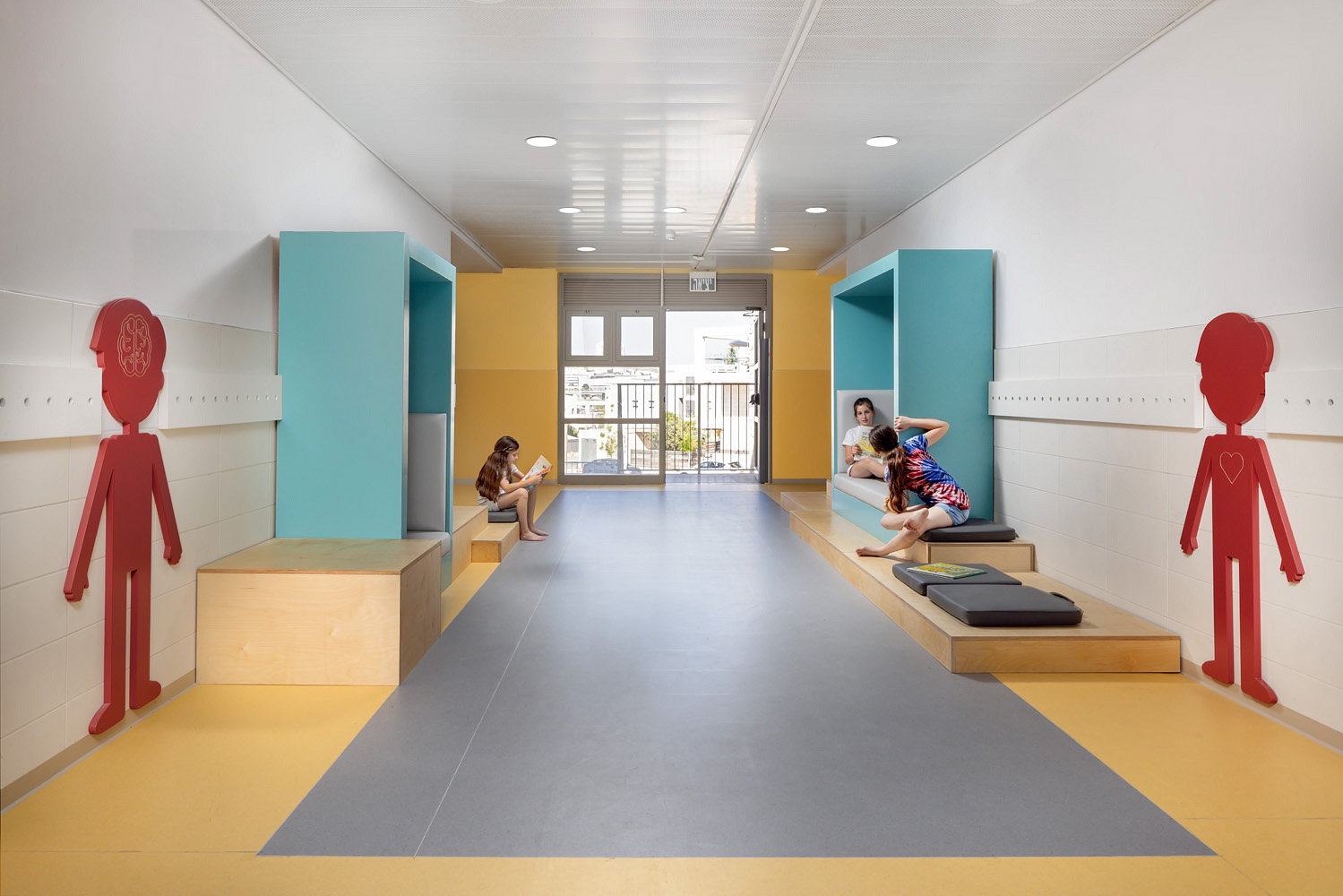
The school operates according to the principle of learning through movement, grounded in the sciences in their broadest sense. Early on, the school leadership recognized that learning is not confined to the classroom or to fixed time frames, but takes place across multiple spaces and modes. As a result, the public spaces on the learning floor were transformed into a complete learning experience, complementing classroom activity and enabling students to choose experiential, independent, or guided learning at any moment. The spatial intervention was based on creating a continuous and cohesive design language connecting floor, walls, and ceiling. The floor was given a central role, functioning as a platform for informal learning, individual work, and guided group activities—becoming a pedagogical tool in its own right. The central corridor connecting the two learning zones was redefined with a strong visual and functional presence. Custom-designed floor graphics support diverse learning principles—from mathematics to movement and emotional awareness—encouraging curiosity, motion, and exploration.
This vibrant visual language extends to the walls and, at selected points, to the ceiling, creating the experience of operating within a unified conceptual environment. The result is a learning space that enables an experiential continuity between thinking, movement, and use—embodying a holistic approach to learning environment and workplace design.
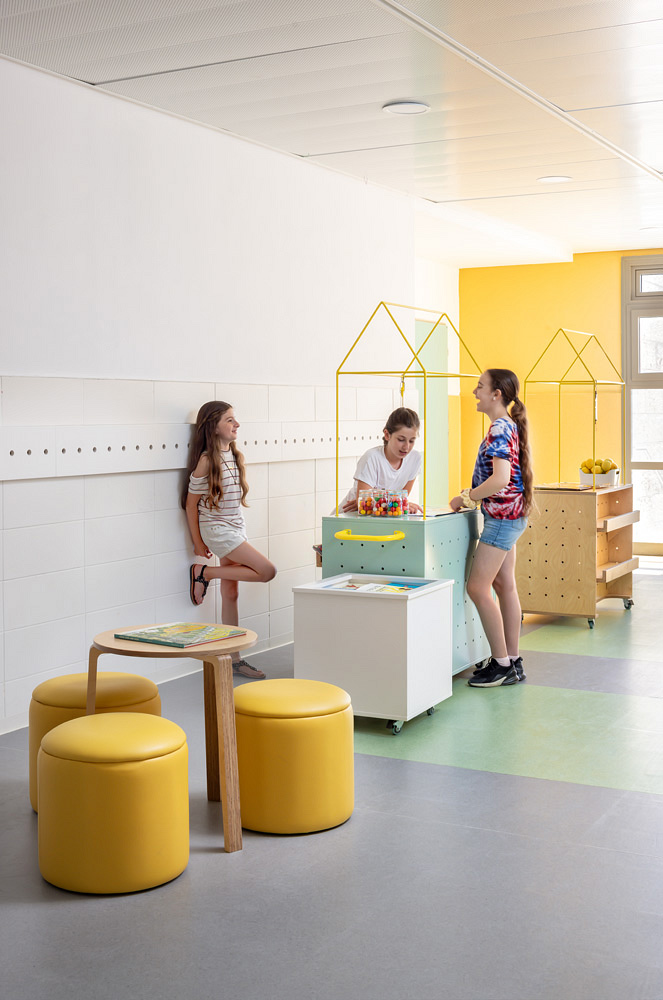
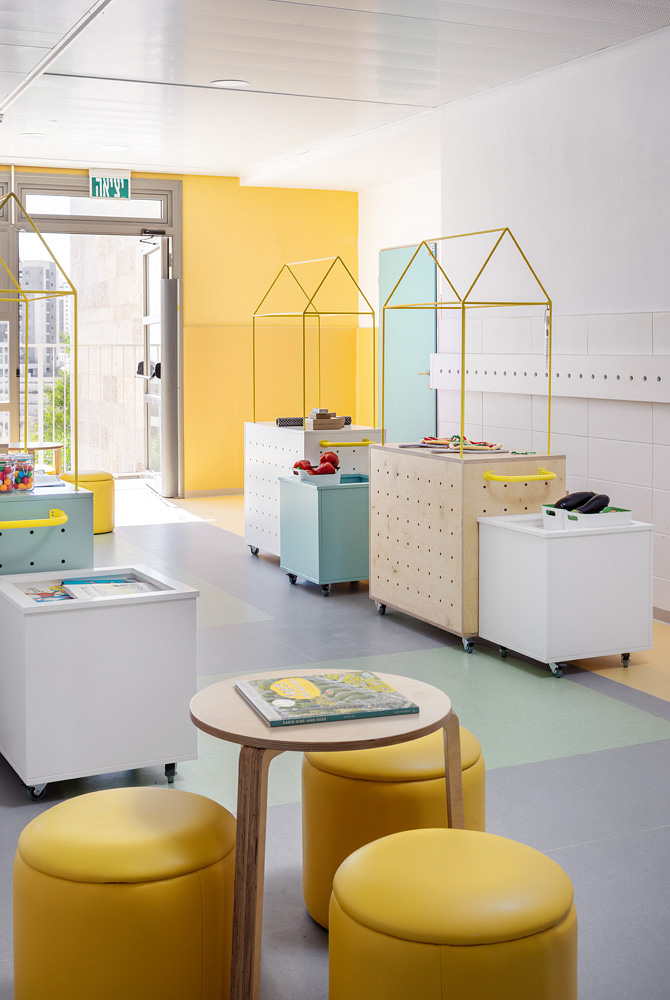
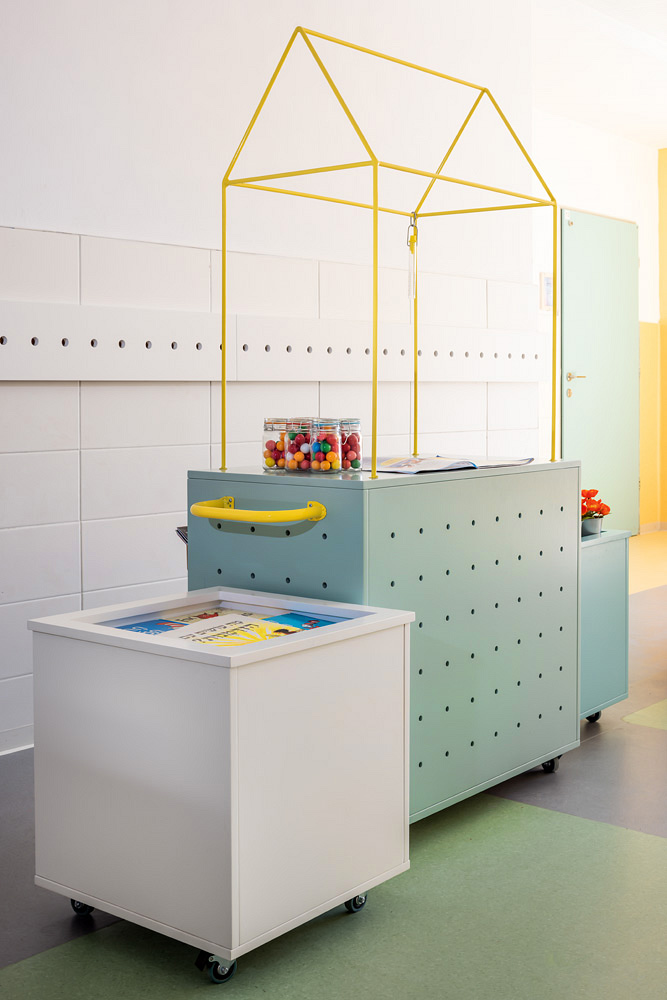
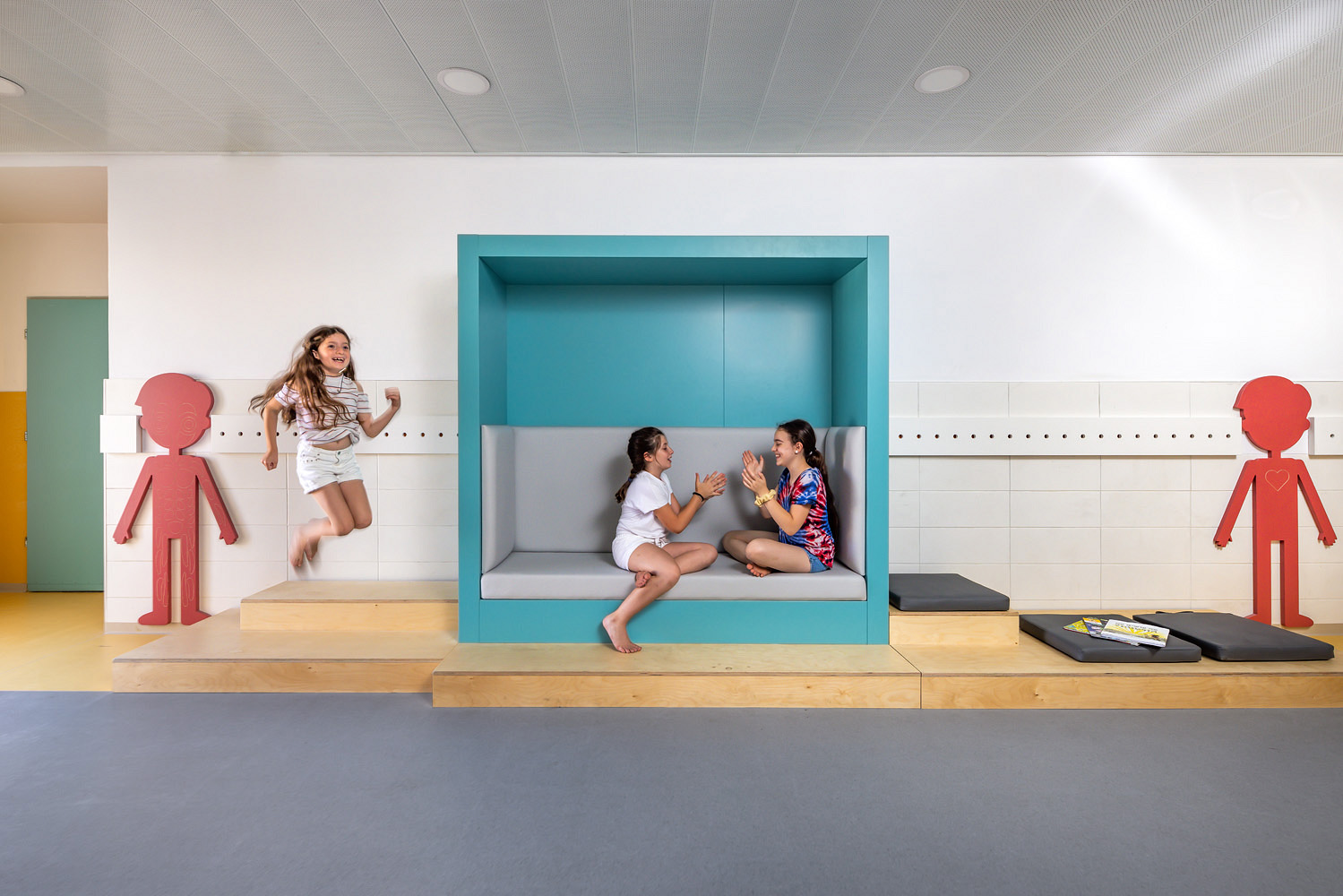
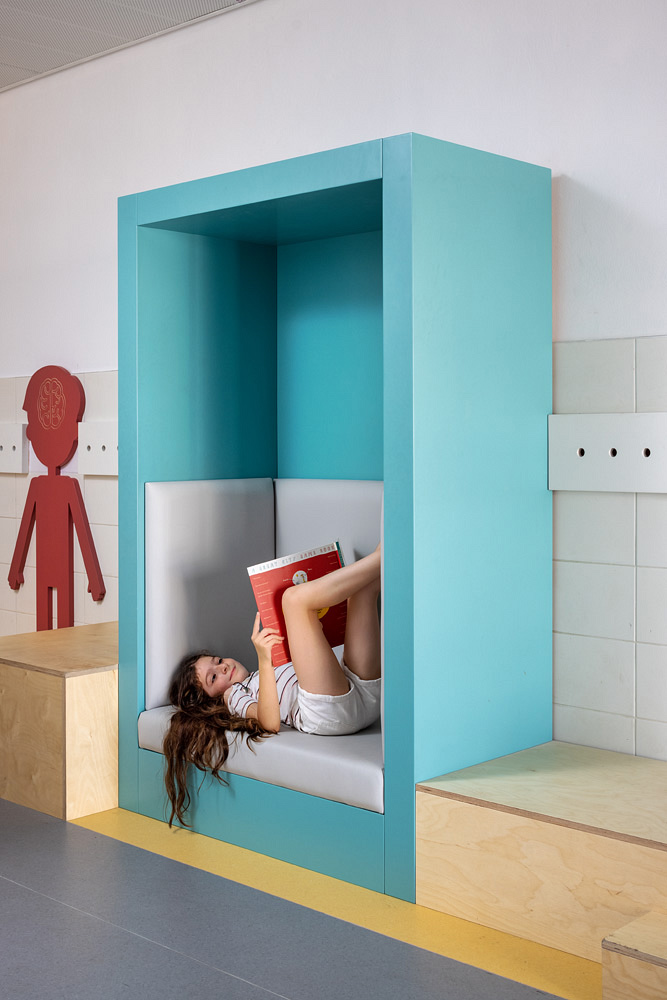
At the ends of the corridor, complementary functions for play, relaxation, and social interaction were integrated, including kiosks, platforms, and seating niches that expand the range of possible uses. A balanced color palette was chosen to convey calm and stability alongside activation and engagement, and to accommodate a wide age range through visual and formal abstraction. The outcome is a space that encourages active learning, choice, and independence, demonstrating how learning environment design can translate educational philosophy into a tangible, meaningful spatial experience.